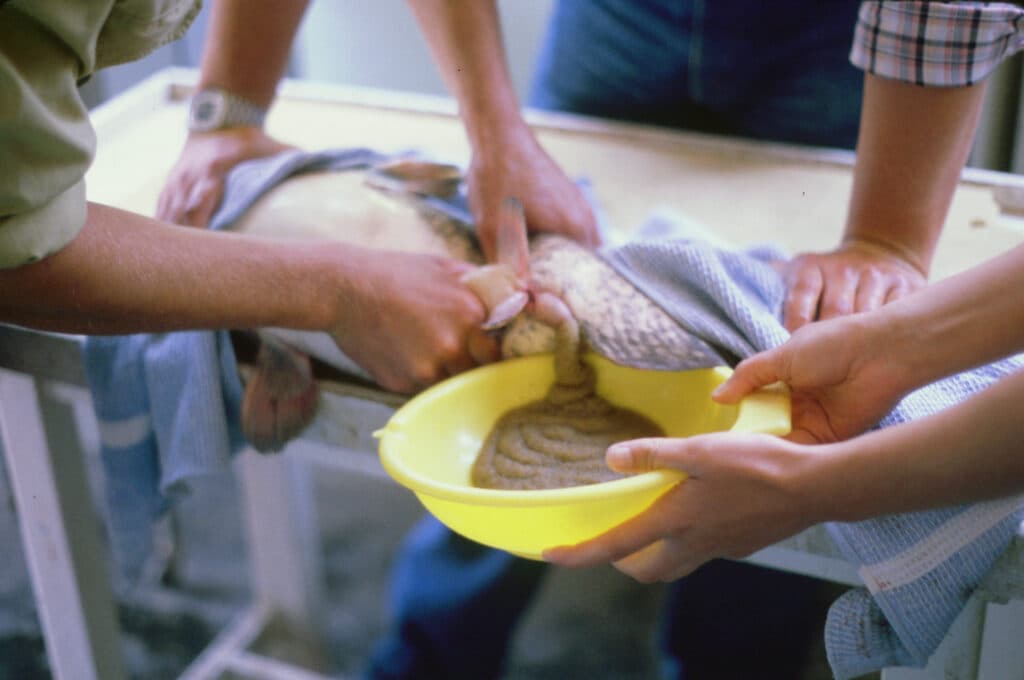
With 57% of EU fish consumption coming from China and South-East Asia, EU producers face tough competition, which is only exacerbated by the fact that natural fish stocks have been significantly reduced. As far as catfish products are concerned, the market is oversaturated with imported pangasius and much more efficient technology is needed to gain a foothold in this market. The SILGEN project promises to do just that. a full-cycle freshwater fish farming company with over 1,500 hectares of ponds in the Retimajor area hopes to meet this demand by using sustainable farming technology for European catfish (Silurus glanis). This company’s technology is resource-efficient, environmentally friendly, faster and more productive than existing alternatives, and its implementation is funded by the EU under the SME Instrument as a SILGEN project (Sustainable farming of European catfish (Silurus glanis) in an innovative, resource-efficient and environmentally friendly pond farm.
Ferenc Lévai, SILGEN coordinator, talks about the main innovations of the project and the results of the project feasibility assessment ahead of its end on May 31.
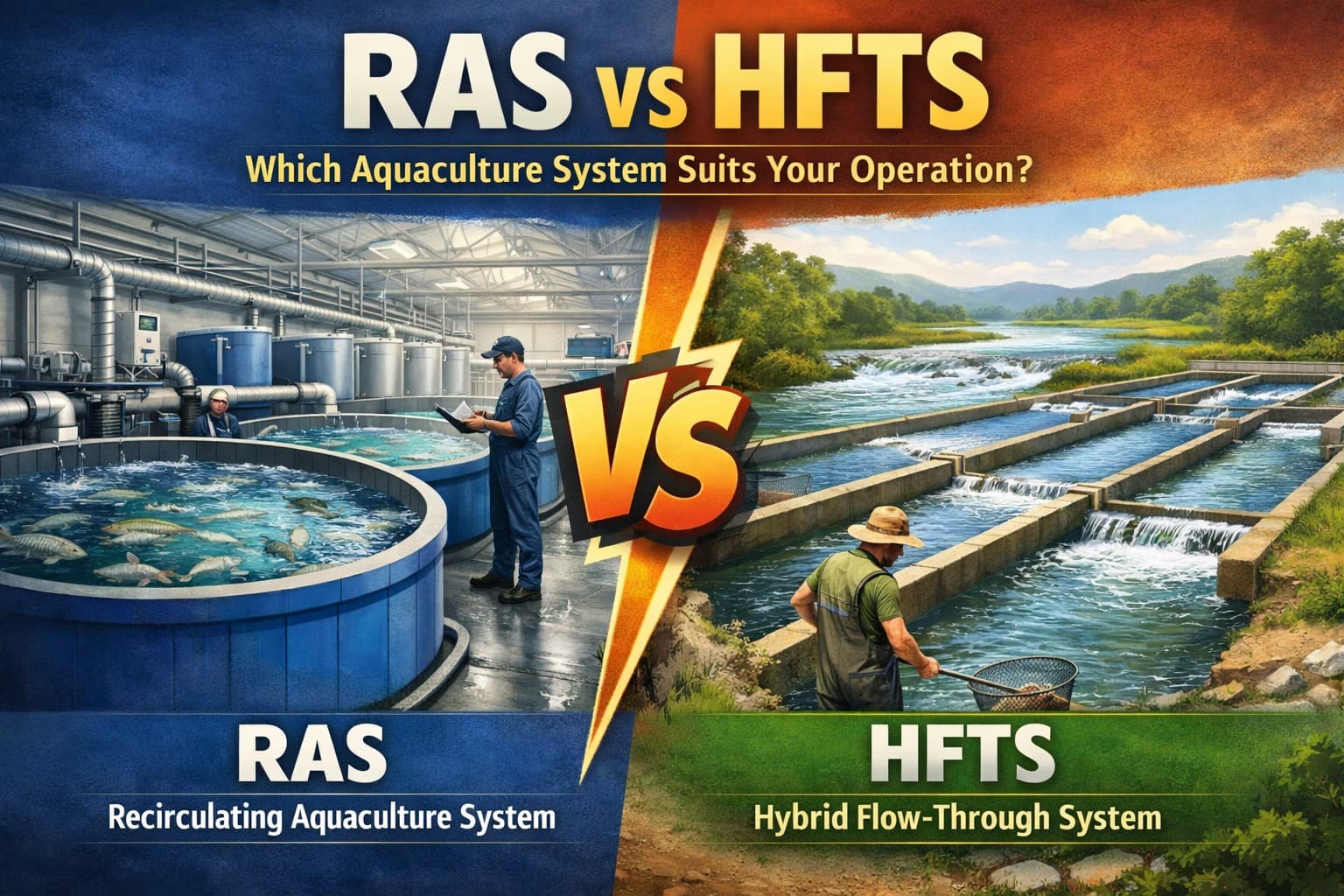
By using annual products grown in recirculating aquaculture systems (RAS) and producing “table” fish in ponds, we can reduce the time to produce commercial fish to two years – instead of the three years required using the old method – and increase the yield of catfish from 30 kg/ha to 3000 kg/ha.
How is your solution to the problem of aquaculture different from existing, already known, practices? – In traditional pond culture, high-quality (and high-value) predatory fish are cultivated together with carp. Their share in the total volume of production is 30-40 kg/ha, which can be qualified as “good” for traditional fish farming.
Our target fish, the European catfish, is also valuable for consumer qualities and price Predatory fish. Until now, this fish has been raised mainly in earthen ponds with very low stocking density, fed with carp, or in closed systems fed with artificial feed. Both technologies work on the border between losses and benefits, which is why production is at such a low level compared to carp or trout cultured in Central and Eastern Europe.

In our project we we combine closed system technology with pond culture.The closed system is unmatched for yearling production, but the production of commercial (“table” size) catfish can compete with Asian pangasius at “throwaway” prices only with the use of pond culture. the time of obtaining marketable fish up to two years – instead of the three years required using the old method – and increase the yield of catfish from 30 kg/ha to 3000 kg/ha. In this case, the fish are fed pelleted compound feed, but may also consume many natural organisms grown in ponds. These feed sources make feeding complete in terms of nutrients. Another difference between our technology and the old one is the use of pond recirculation in a special way. We use a water-saving technology in which polluted water from intensively fished ponds is treated in polyculture ponds with low stocking density, in which the fish are not fed additionally.
Why did you choose to focus on European catfish? – European catfish is the second largest freshwater fish in Europe after sturgeon. It is a fast-growing, tasty carnivorous fish that does not have intermuscular bones.
It tolerates low winter temperatures (unlike African catfish) and can be cultivated in large carp ponds.
What did you learn new when evaluating the feasibility of the Horizon 2020 (H2020) phase 1 project? – The opportunity to study the feasibility of the project under the SME instrument phase 1 provided a good opportunity to strengthen our business strategy. The good news is that our project has a market where demand exceeds supply, and that our species is aquatic and there is no danger if a few escape from the ponds into a river or lake.
We have also determined that our best selling product will be “fresh fillets on ice”. It can easily compete with pangasius. The freshness of the product and the short transport distance are very important factors, and this is why the use of tuwa fish will be a great advantage in the market.
What are the main guarantees you will provide to the consumer? – The aim of this project (phase 1 of the SME Tool) was to carry out a feasibility assessment. However, during phase 2 of the project, we plan to carry out a larger project on a pond farm with an area of 1500 hectares of ponds, which will demonstrate the application of the technology in a real environment and provide guarantees to the consumer.
So you plan to apply for funding for phase 2 of the project after its completion in May? In addition to the above, what else do you plan to achieve with additional funding? – We definitely plan to apply for phase 2. The funding – and we hope to receive it – will be used mainly for technological purposes and to commercialize the SILGEN project. We plan to modify our carp ponds for catfish cultivation and carry out selection work using ‘Marker Assisted Selection’ (MAS) in order to obtain even faster growing and disease resistant catfish individuals.
The latter work is planned in close cooperation with geneticists from the University of Pannonia, Hungary. The improvement of our processing plant will also be part of this project in order to develop it.
Where do you see your company in 5 years? – On our own farm (approx. 1500 hectares) we would like to reach the production of approx. 5,000 hectares, we would like to reach the production of 2,000 tons of catfish in five years. We would also like to become the main stocking supplier for the farms that will cooperate with us.
SILGEN
Funded under H2020-SME-1
Translation: Volodymyr Gerasimchuk
Our company Vismar Aqua can develop a comprehensive solution for growing European catfish (RAS + rearing technology in open ponds). Please contact contacts.