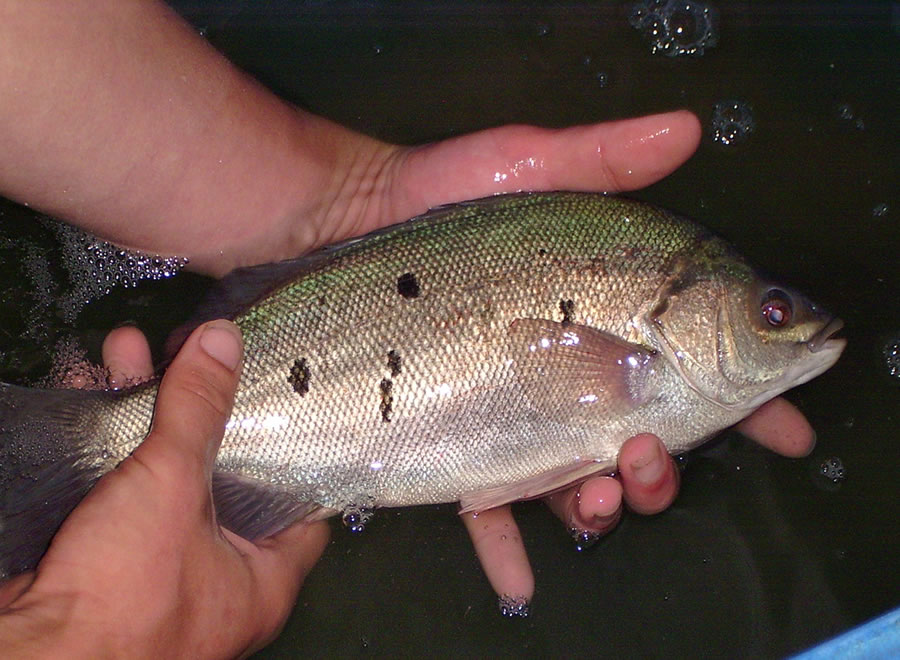
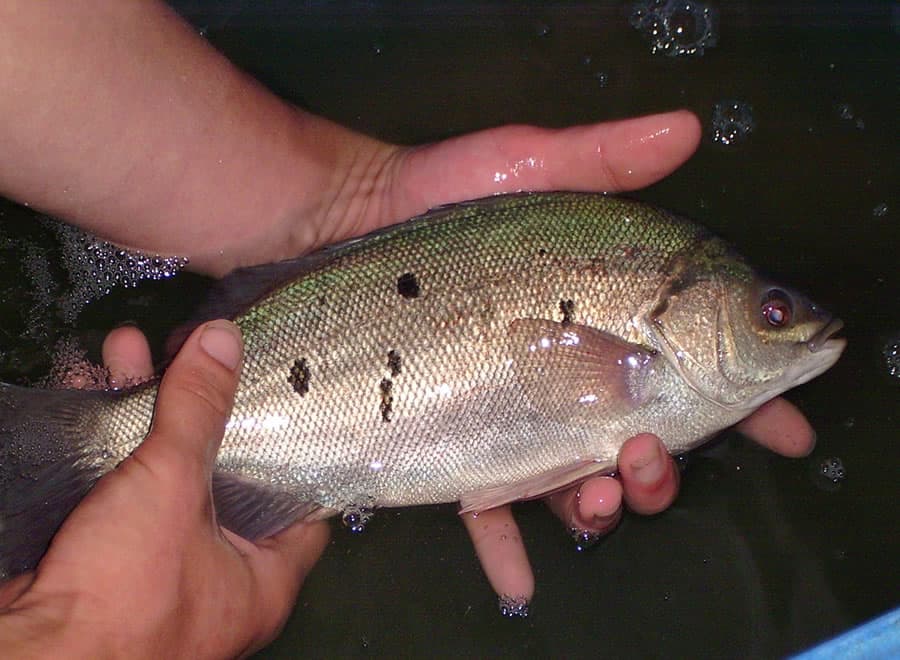
Jade perch (Latin:Scortum barcoo, English: Jade perch, Barcoo grunter) is a fish from the family Terapontidae, endemic to Australia. It can be caught in most major rivers of the Green Continent, including the Barka River. It was this river that gave the name to this interesting fish.
In nature, it is an omnivore, hunting crustaceans, mollusks, insects, and fish. Grows up to 35 cm, weighing up to 3 kg. The body is brownish-green with black spots along the body. It was because of the greenish color of the perch’s skin that it was called jade. The fish has a very large bream-like body and a small head.
Currently there is a real boom in the cultivation of this interesting fish. The fish is distinguished by its unpretentiousness (you need to try very hard to kill it), and very rapid growth (1.5 kg in 12 months). Due to the accumulation of internal fat, the meat of this fish is very tender and is considered a real delicacy not only in Australia, but also in the countries of Asia, America and Europe. Fish meat contains 18 amino acids important for human nutrition, as well as Omega-3, Omega-6 fatty acids, and vitamins. The amount of unsaturated fatty acids in jade meat is the highest among all known freshwater fish species.
In terms of growth rates under aquaculture conditions, it is even ahead of tilapia.
Jade perch is a rising star of the world aquaculture. In just a couple of years, this fish has won the hearts and stomachs of not only Australians, but also representatives of Asian communities around the world. More and more often, in oriental restaurants you can find this delicious fish on the menu.
The technology for growing jade perch is practically no different from tilapia. Jade perch likes water temperatures around 24-26C (tilapia grows best at 28-30C), and uses tilapia food. The planting density is slightly lower than the planting density of tilapia (with oxygenation): jade perch – 80-100 kg per m3, tilapia – up to 140.
And so, to summarize, we can summarize that jade perch has many advantages:
- high growth rate
- the most high level of Omega-3 and Omega-6 acids
- unpretentiousness to living conditions
- uses inexpensive food for nutrition
We are currently preparing a project for growing jade perch in Ukraine. The cost of growing fish will be 25-30% higher than tilapia. But the retail price for this valuable fish should more than cover the costs of growing it.
The minimum project for growing this type of fish is 20,000 kg per year. The cost of capital costs is about 200,000 Euro. Operating costs will be about 70,000 Euros per year.
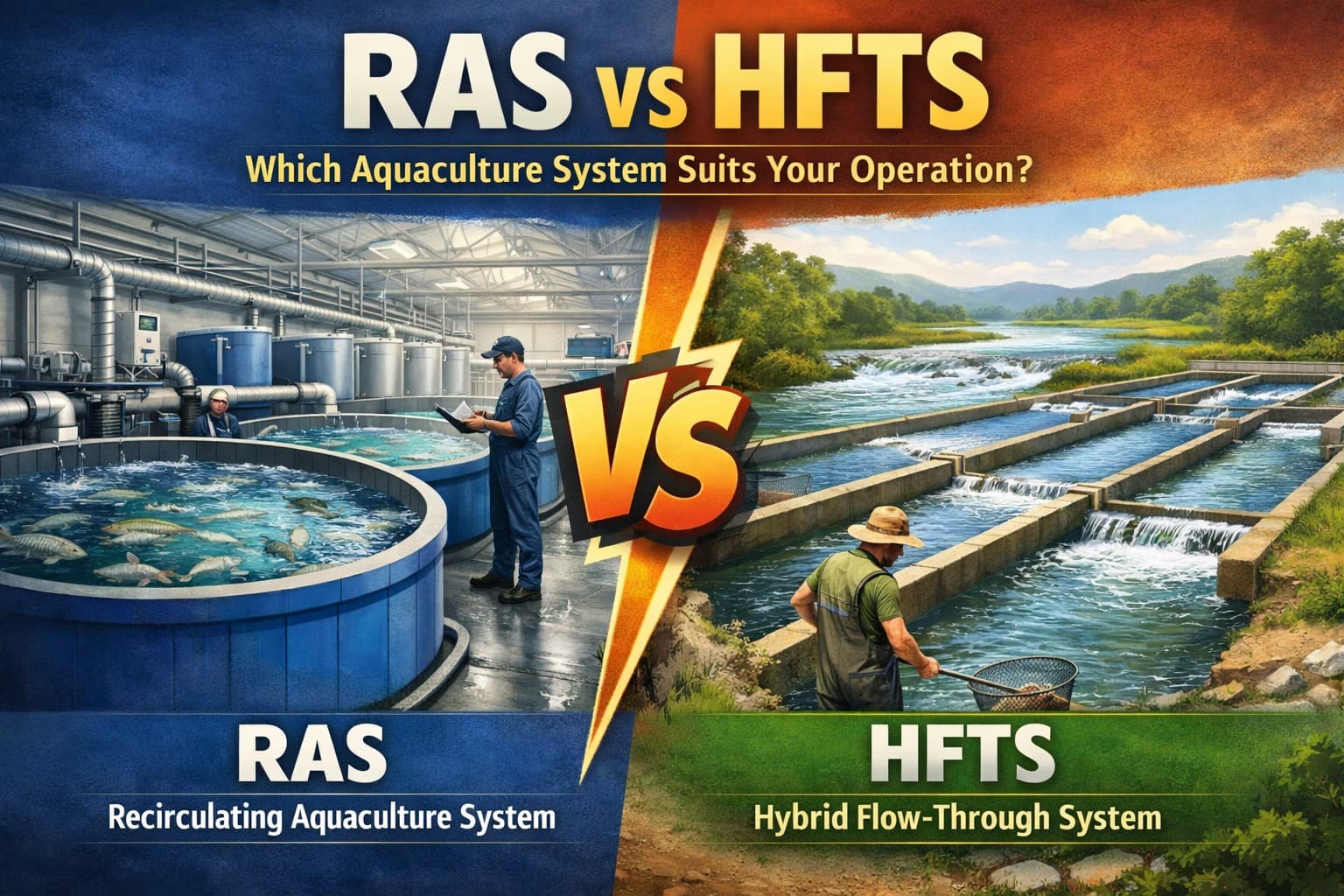
Concerning the acquisition of the project and construction of the RAS for growing jade perch, please contact us:
Leading specialist – LYUBOMIR GAYDAMAKA
+380 50 879 6803
+380 67 502 4730