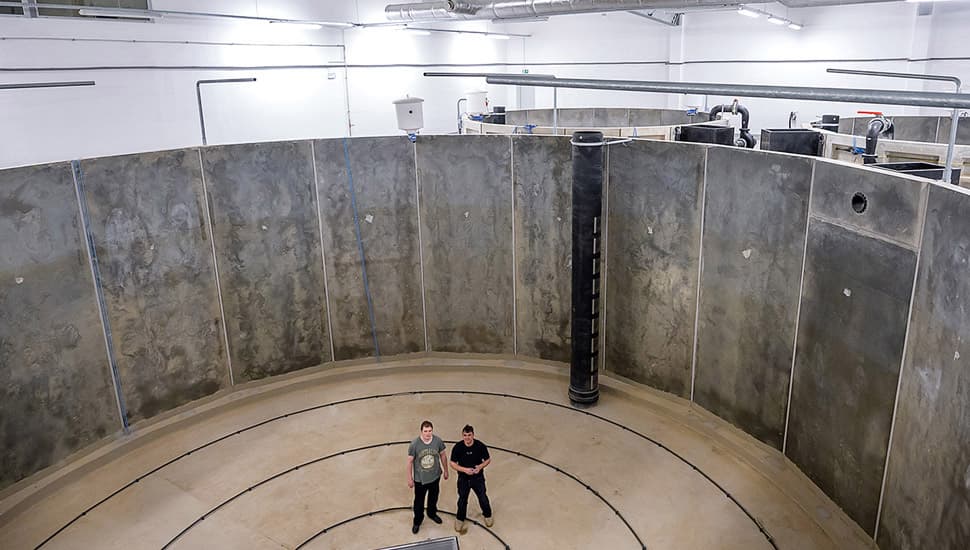
In 2011, when Jolanta Gdanec and Tomasz Karapuda started drilling a well for geothermal water in Poland. This water was intended for use in the spa center of the hotel, which the partners planned to build. The well reached a depth of 1,224.5 meters.
Within a year, however, the couple turned their attention to a recirculating aquaculture system (RAC) that would allow them to grow Atlantic salmon indoors, avoiding the open ocean marine environment where traditional producers have faced numerous diseases, parasites, conflicts with environmental groups, etc.
After securing the necessary equipment, contractor, farm plan, as well as financing from banks and EU funds, Gdanec and Karapuda became president and vice president, respectively, of Jurassic Salmon, a company named after the Lower Jurassic period, from which the company extracted geothermal waters.
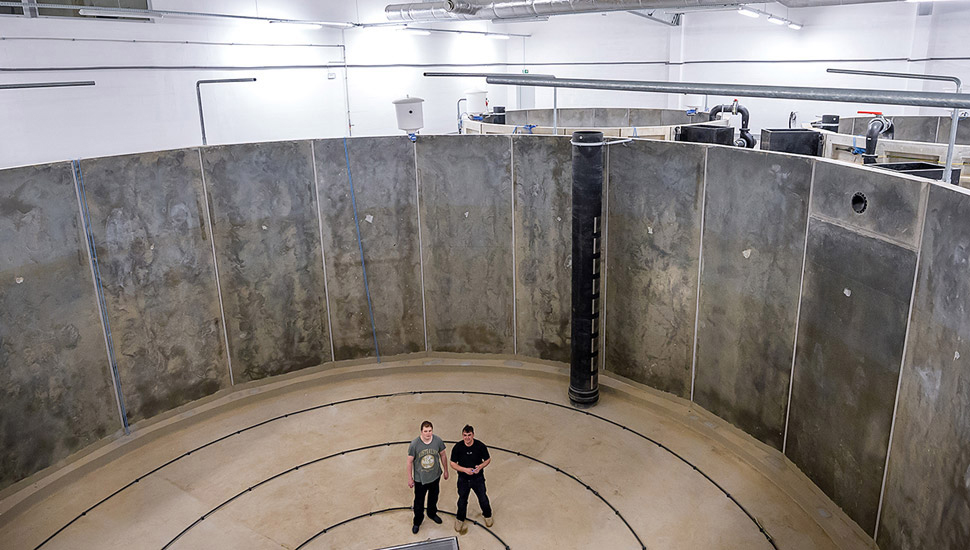
Salmon is one of the three leading types of European aquaculture production according to data from the European Commission. The company’s RAS farm occupies an area of only 2.2 hectares and is one of three closed farms in the world for the production of salmon from eggs to commercial fish. The enterprise is also a giant step forward for the development of aquaculture in Poland, which is not one of the leading aquaculture producers in EU countries like France, Great Britain, Greece, Italy and Spain.
Official opened in June 2015, Jurassic Salmon has wasted no time in gaining recognition from the local business community, as well as being recognized at important international gatherings. Last year, the company passed ASC certification and also brought home two Golden Fish awards: Company of the Year and Investor of the Year. alt=”Jurassic salmon office entrance” width=”675″ height=”511″ /> Jurassic salmon office entrance[/caption]
The facility is also certified by the International Recommended Standards (IFS) and the British Retail Consortium (BRC); as the company has to carry out a small processing of the products on site (the fish must be killed and gutted before sale).
What Michal Kowalski, deputy head of production and food technology, really wants is to pass the organic certification, as well as the growth of RAS capacities in general.
“It would be icing on the cake if it was possible to get an ecological product certificate, and also if it was possible for products grown in under our conditions,” he said, explaining that current laws do not allow for organic certification due to the lack of adequate research on ASD technologies.
“We are organic because of how we work, how the system works, how we treat the environment. Yes, we believe we are. We don’t use chemicals, we don’t have parasites, we separate the fish feces and send them to be used in an organic farming facility,” said Kowalsky.
Farmed salmon are stress-free, grow in low-density, predator-free conditions, etc.
The process starts with importing batches of 80,000 to 120,000 salmon eggs four times a year from fish farms in Norway and Iceland.The rest of each salmon’s life takes place at the Jurassic Salmon facility: from hatching to alevins (salmon larvae), then fry, smolt and up to an adult fish weighing 5 kilograms or more.

The waste water must undergo a process of denitrification (decomposition of nitrates into free nitrogen) before being discharged into the environment using a controlled process. Nitrogen and phosphorus compounds are removed from the water, which is then reused in the farm temperature before being released into the open environment. Fish feces are removed from the water and used as fertilizers.
To receive ASC certification, Jurassic Salmon Farm was evaluated on several principles, including “potential impact on the natural environment, local biodiversity and functioning of ecosystems; good neighborliness and conscientious citizenship; to protect the health and integrity of wild animal populations”.
The European Commission, which is responsible for the day-to-day business issues of the European Union, aims to improve the efficiency of aquaculture in the EU by reducing red tape, according to data from 2016 that most EU states plan to improve procedures by online application and granting a longer license period, for example. Eight out of 28 European countries also indicate ” Prioritizing the development of maps / databases / studies to identify the most suitable areas for aquaculture”, and the same number of countries plan to focus on this process.
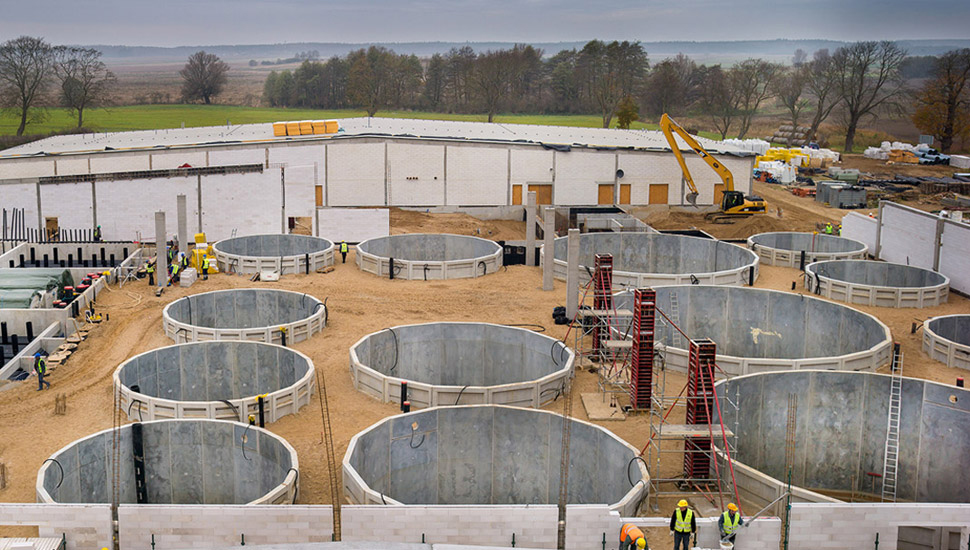
“Of course, cage farming in the sea will always be cheaper,” Kowalski said. But these operations have to deal with external factors, such as parasites, weather, etc., and his experience shows that inland fish farms work more successfully, expanding and building new fish tanks to significantly increase salmon production.
The planned capacity of the Polish salmon farm is 1,000 metric tons. of Atlantic salmon a year. The product is sold in restaurants and through distributors in Poland and other EU countries. Kowalski is proud that the fish they grow are highly valued in local restaurants, but he explained that they are now stuck in an awkward phase of growth.
We are organic because of the way we work, the way we treat the environment there is.
“At the moment we are too small for big wholesale customers and we are already too big just for restaurants,” he explained. “Thus, we are thinking about increasing production to 2,000 to 3,000 tons per year.”
Kowalsky is very satisfied with the results of the company’s work during the two years of operation. It also envisions the global growth of aquaculture based on ASD technology.
“We can grow salmon anywhere in the world! And you don’t need fjords to do it,” he said. “All you have to do is build a farm and then any country in the world can have fresh salmon, regardless of water source or technology. This is the future of aquaculture.”
Translated from @GAA_Advocate