Our country is going through very chaotic times: the war in the East, the country’s economy has cooled down, panicky (Everything is lost!) and pessimistic (Everything is bad!) moods dominate among entrepreneurs.
But do you know why there is confidence that everything will soon be much better in our country? Because you get to know and communicate with people who create added value. And they not only create added value, but create a new market.
The hero of our story today will be Andrey Pigulevsky, the owner of the first oyster farm in Ukraine. Yes, yes, yes! Precisely oysters, the same ones that are happily eaten by the dozen and washed down with expensive wine and champagne at the movies. Those oysters that Casanova ate by the dozen. Those oysters, the consumption of which has been a sign of power and wealth for thousands of years.
Before cultivation began on the Ukrainian farm, all oysters were imported to us. The main import countries are France, Spain, Italy, Greece, etc. The market’s operation scheme was very simple: delivery of fresh oysters – sale to HORECA establishments – retail sale.
On average, oysters were sold at a retail price of 2-2.5 Euros per piece. Due to exchange rate instability, the price of oysters increased significantly, so people began to buy less. What did Andrei Pigulevsky do to renew people’s interest in eating oysters? More on this a little later, but now a few lines about the history of oysters and their benefits.
The culture of oyster consumption in the territory of modern Ukraine dates back more than 3000 years. The Black Sea has always been famous for its abundance, which was used by the Cimmerians, Scythians and ancient Slavs. Herodotus himself, walking through the lands of the Kherson region, noted the delicate taste of the Black Sea oyster due to the lower salinity of the water than off the coast of his native Hellas. And in the 18th and 19th centuries, oysters were exported to many European countries. But with the restoration of Soviet power, the tradition of growing and consuming oysters by the broad masses of the population began to decline. Soviet scientists have repeatedly attempted to recreate the conditions for growing oysters, but almost all attempts ended in failure because the wrong technology was used.
In Ukraine, on the territory of the temporarily occupied Crimea, an oyster farm was built, but its productivity at the best of times did not exceed 4000 kg (40,000 pcs) per year, which is negligibly low productivity for the enterprise to be profitable.

Oyster is an ideal product for a daily balanced diet; it is a natural source of easily digestible protein, B vitamins, Omega-3 fatty acids, iron, copper and zinc. It’s not for nothing that legends were made about the amazing properties of oysters as an aphrodisiac; Casanova himself ate 50 oysters at breakfast!!! Modern scientists have also proven the benefits of oysters for strengthening vitality.
And now let’s ask Andrey a few questions about growing oysters in Ukraine.
– Andrey, tell us a little about what you do.
– Company Oysters Scythiawas founded in 2014. The farm team now numbers 5 people. The company’s goal is to revive the culture of oyster consumption in Ukraine and the entire Black Sea basin, which was so unfairly forgotten over the last century.
Oysters of Scythiacooperate with the Academy of Sciences of Ukraine, which Conducts scientific research and research on the basis of the farm complex.
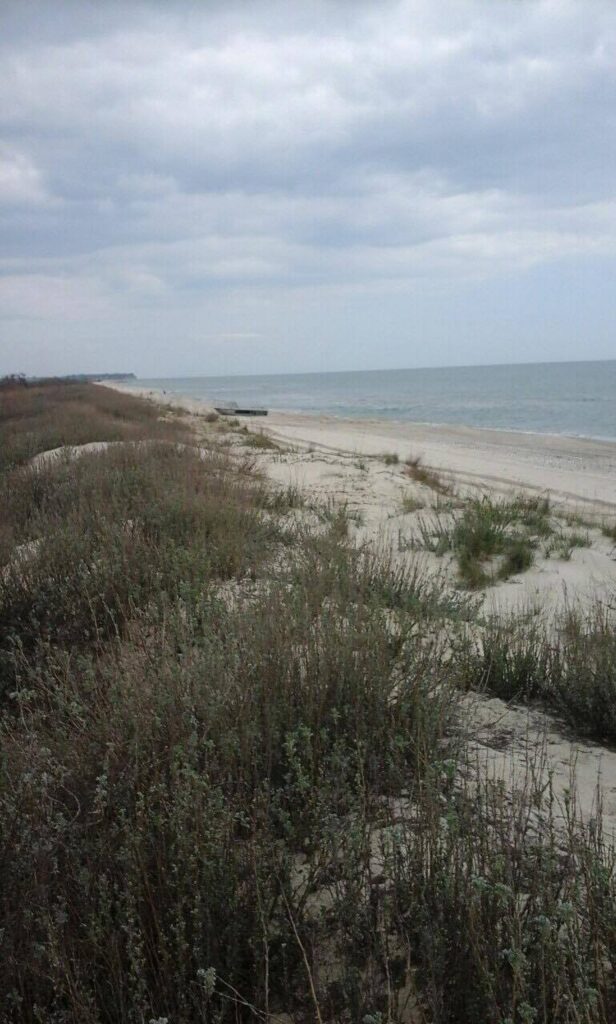
Scythian oysters are grown by us on the Black Sea coast in an ecologically clean place in the Kherson region, in close proximity to the Black Sea Biosphere Reserve, protected by UNESCO. The clean and rich water of the Black Sea makes our oyster happy, which directly affects its quality – Oysters of Scythiahave tender meat with a subtle sea aroma and a sweetish nutty aftertaste.
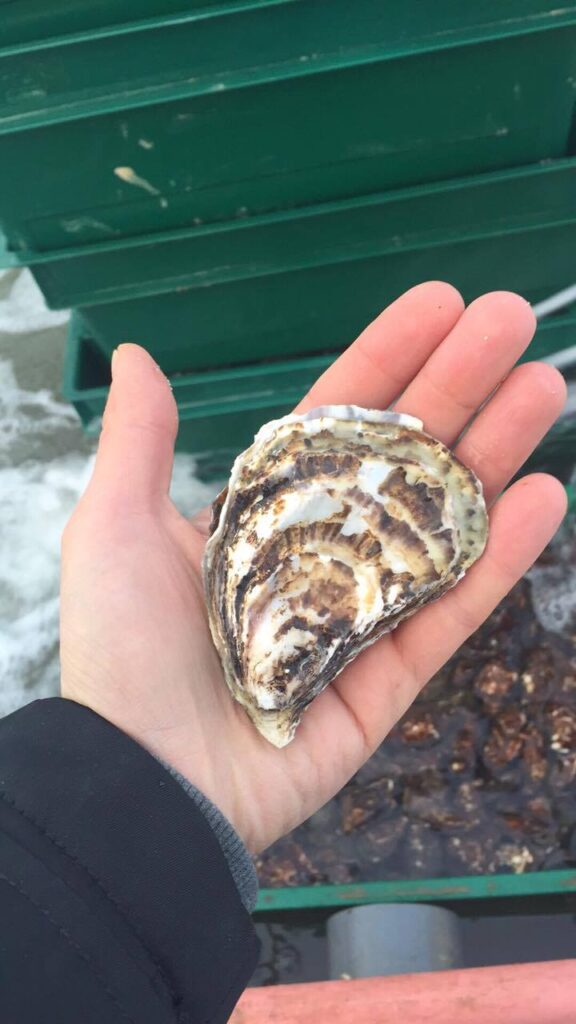
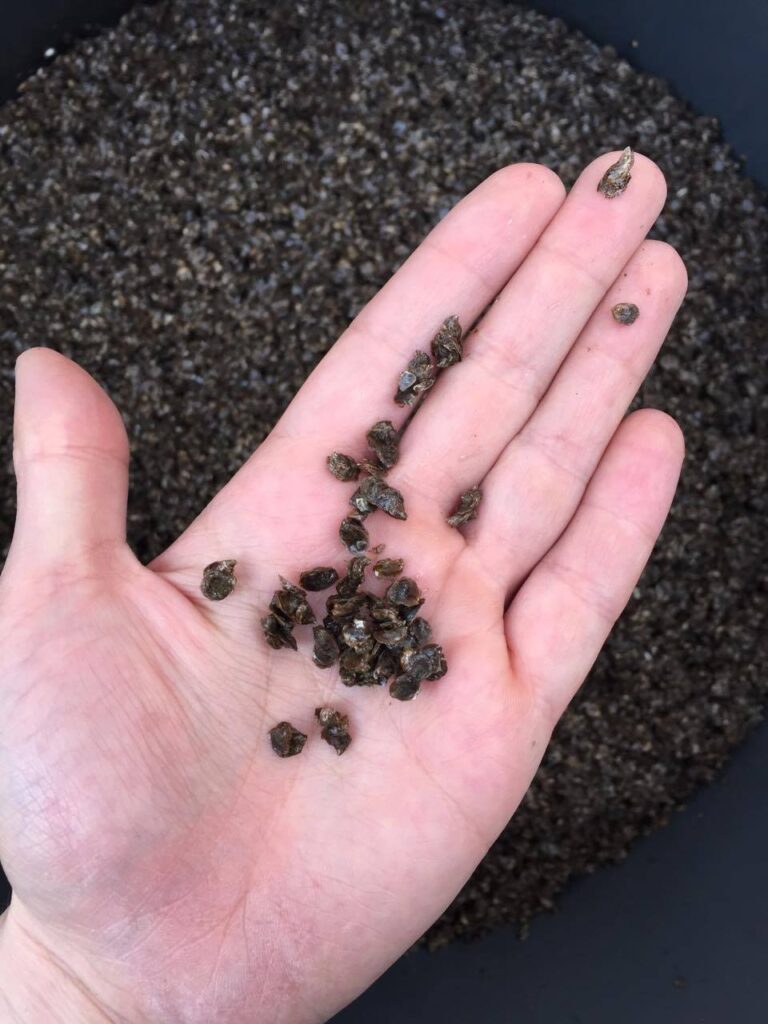
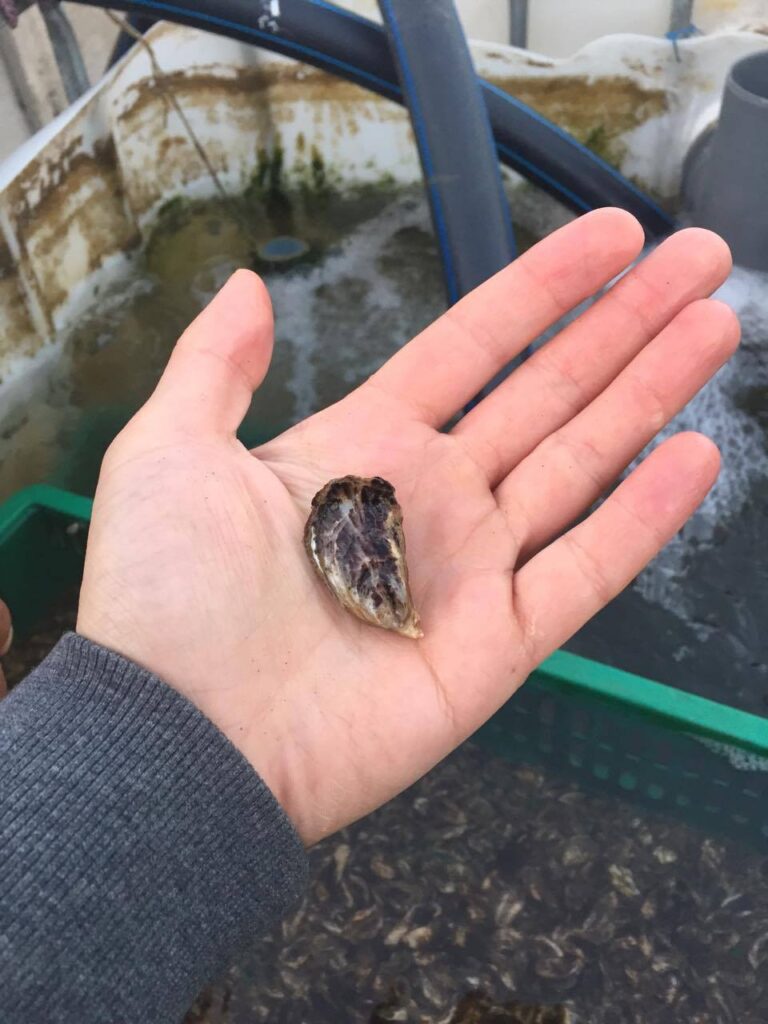
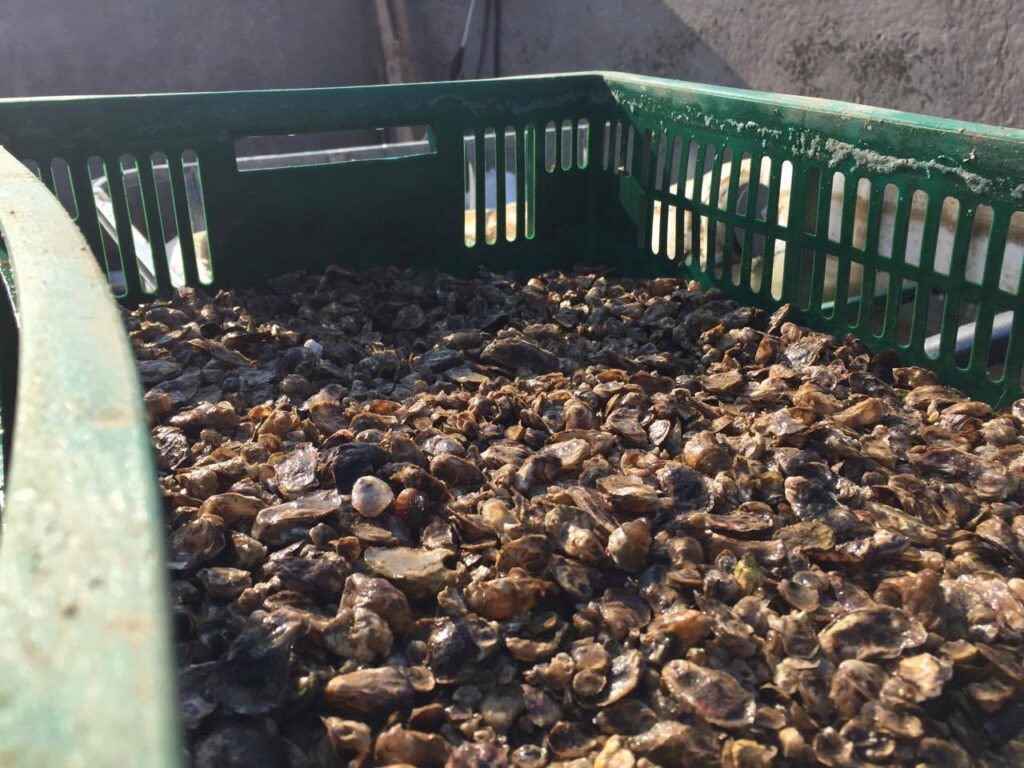
We grow the Crassostrea Gigas oyster, also known as the Pacific or Japanese oyster, from planting material taken from a famous oyster nursery in the West of France. The unique system developed by the Ukrainian team allows us to grow an oyster in 16 months. During this time, our oysters undergo natural refining in the slightly salted water of the Black Sea, which gives them unique taste.
– How many oysters do you grow?
– Last year we grew around 17,000 kg of oysters. This year we plan to increase productivity to 40,000 kg per year. We think that within a couple of years we will be able to increase cultivation to 100 tons, which will give us the opportunity to completely displace imported products from the market. We already occupy more than half of the market.
– How do you manage to compete with imported products?
– Firstly, the quality of the oysters we grow is at the level of imported ones. It is clear that in France there are more expensive oysters, but they have a very high price tag. Oysters of the most affordable price category come to our country. At retail they sell for 2-2.5 Euros per piece. Secondly, we offer a dozen (12 pieces) for 399 UAH (1.1 Euro per piece), which is almost two times cheaper than imported ones. Thirdly, we guarantee the freshness and quality of the grown products, because our oyster reaches the buyer’s table the very next day after harvest.
– How did you come to become an oyster farmer?
– This is a long story, I have already told it thousands of times (from the author – as I understand you). But in short, at one time I practiced a raw food diet. I was constantly looking for new foods that can be consumed raw. I accidentally met a man who imported fresh oysters and sold them to me at a good price. I tried a few and liked it! And I started eating them every day. Then an acquaintance stopped carrying oysters, and the oysters on the counter were 2 Euros apiece, I decided that this was very expensive and I needed to do something about it.
I began to collect information, communicate with scientists on the topic of oyster farming in the Black Sea, and planned to build a farm in Crimea. At the same time, I went to France, where I spent 3.5 months on oyster farms. This gave me the opportunity to become familiar with growing technology. I realized that this can be done in our country. It’s not just possible, but necessary.
At the end of 2013, we found a good place to build an oyster farm in Crimea, but we had to abandon it due to the events of 2014.
I abandoned the idea for six months, almost abandoned my dream. But then I continued working and at the end of 2014 I managed to plant the first spat (oyster planting material) in order to get our first harvest of Ukrainian oysters in 2015.
– Do you have any special education? What is your education?
– I have no special education. I started my career in information technology. I graduated… in my specialty… But by nature I am a very inquisitive person. If I want to learn something, then I turn over mountains of information in order to achieve the desired result. I see the goal – I see no obstacles! At one time, I communicated with many scientists (still Soviet-trained) who studied the topic of oysters. They proposed oyster farm projects completely divorced from the economy and the realities of life. My experience of communicating with the French helped me a lot in realizing my dream.
– What do you advise those who want to engage in a similar business (aquaculture, mariculture)?
Adopt other people’s successful experience. Read books, consult with people who are actually doing something similar. Don’t be afraid to experiment! The more bumps you hit during the process of formation, the stronger your business will be. Don’t be afraid to dream and achieve your goals!
We would like to end this publication on such a cheerful note. I hope that this information will help many as desperate as Andrey and the author of this article to become real aquaculture farmers.
Whoever wants, looks for opportunities, who doesn’t want, looks for excuses.
================================================================
If you have questions about growing oysters in Ukraine, then contact for information.
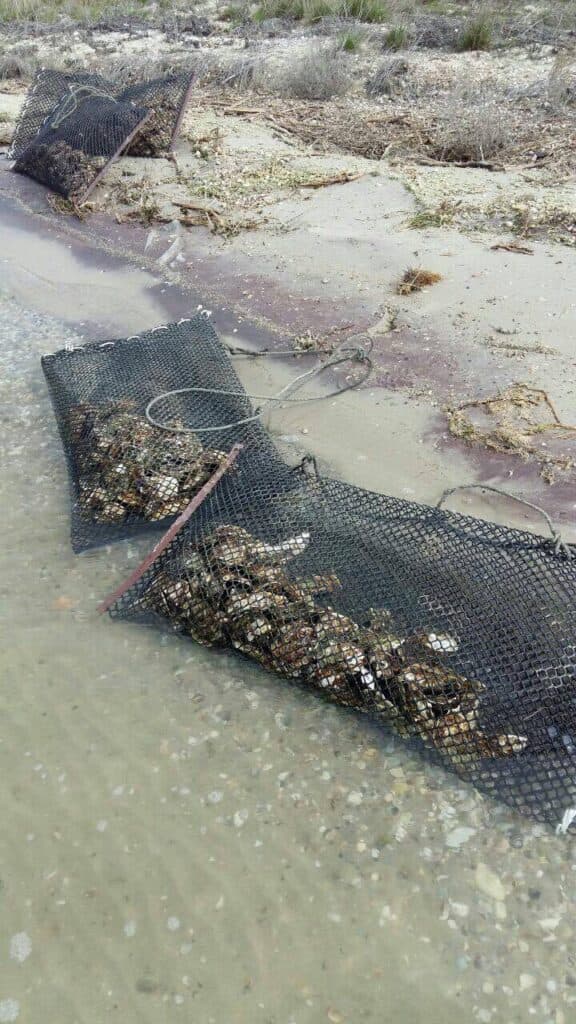
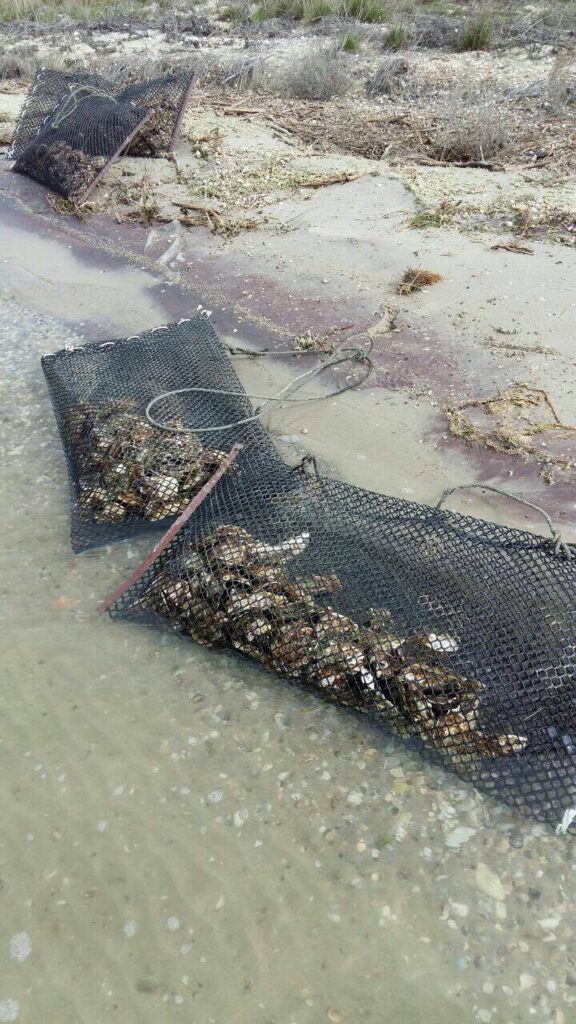
Below are photographs of how oysters grow: