Aquaculture – the cultivation of fish and crustaceans in closed-loop systems – like any business or activity, can face many risks and challenges. Any business is a set of problems that an entrepreneur is trying to solve. Solving these problems requires information and experience. Information is always primary (theory), and experience (practice) already comes during the processing of this information. Therefore, if the correct and useful information is available, then a positive experience in aquaculture can be acquired very quickly. If a person does not want to learn, but only “tries” to grow fish, then I am more than sure that he will not succeed. Aware means armed! Ready to arm yourself with knowledge? Then go ahead and get your orders!
Aquaculture makes it possible to grow living organisms in small volumes in conditions as close as possible to natural ones. You may argue that how can such conditions be called natural if you put a large number of fish in some kind of pool, serve food on a plate, saturate the water with oxygen, automatically remove feces, etc. Who takes care of these fish like this in nature? That’s right, no one. But the task of any aqua farmer is to create such conditions so that the fish feel great and grow quickly. And such growth is only possible in good conditions. More often than not, the natural habitat conditions of a particular type of fish are in a much worse state: drying out, salinization, pollution with industrial waste. All this affects the natural habitats of fish. So our task is to create conditions so that the fish feel like in heaven. Fish heaven! This is exactly what we are trying to recreate when engaging in aquaculture.
Let’s identify the main risks and problems that beginners and not only aquafarmers may face.
And so, the main risks are:
- diseases
- technical failures
- poor quality feed
- overall efficiency project
Diseases
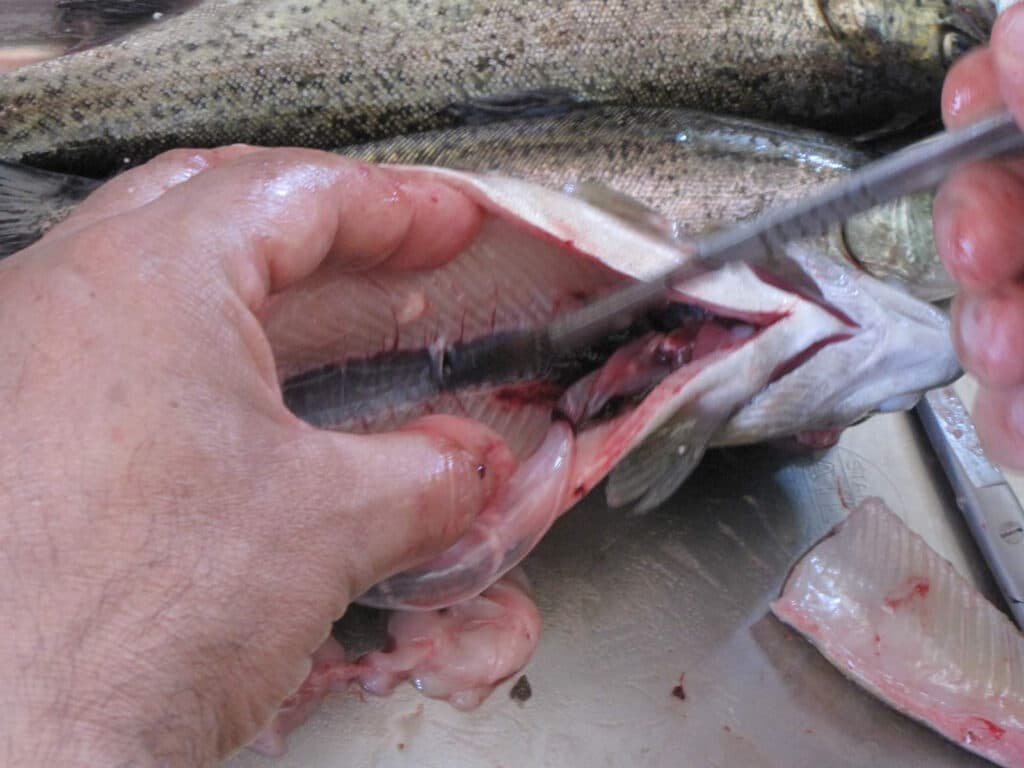
One of the most common problems that a beginning aqua farmer faces is undoubtedly disease. I try to write in simple language, because this article is intended for a wide range of readers. And so, diseases have different origins: parasitic, fungal, bacterial and viral. Typically, the progression of the disease is as follows: damage to the skin by parasites, then secondary fungal and bacterial infection. Parasites, fungi and bacteria are treated without any problems in the order in which they are affected: first we take measures to remove the parasite, and then we remove the fungal and bacterial infection.
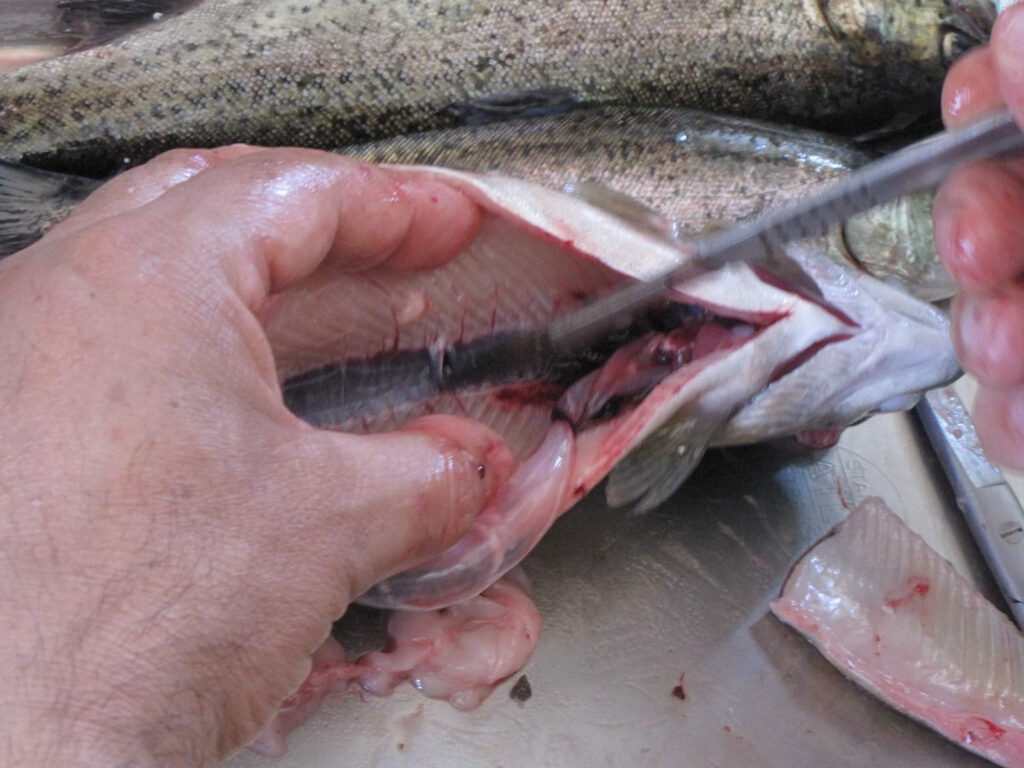
In the case of viral lesions, as you already know, there are no medicines against viruses. In case of infection with the virus, fish mortality reaches 100%. In rare cases, only a few survive. For now, viruses can only be combated by measures to prevent them from infecting farm inhabitants. But this is a topic for a separate article, which will be prepared by a specialist.
Now that you know that the fish is sick, let’s think together about how to prevent diseases, and also look at their causes. One of the most common causes of fish disease is improper conditions for keeping and growing fish (high levels of ammonia, nitrites, nitrates, and other harmful organic compounds). As a result, the fish are under constant stress, which weakens the immune system. Then the fish becomes subject to attack by bacteria and fungi.
Remember that it is not the parasites themselves that kill the fish, but secondary bacterial and fungal infections.
I deliberately skip parasites because the aqua farmer must regularly conduct inspections that are aimed at detecting possible parasites and quickly make a decision to remove them. Remember that it is not the parasites themselves that kill the fish, but secondary bacterial and fungal infections. Parasites are easy to control. Especially when you know the enemy by sight.
In the case of diseases, all actions of an aqua farmer should be aimed at creating optimal conditions for keeping fish. Take care of the quality of the water, and the fish will take care of itself. It is very important to work with successful stocking suppliers. Although I am sure that almost 95% of the fish arrives at the farm in a healthy state. Yes, she suffered the stress associated with transportation. But the main task of the farmer is to create such conditions for the fish so that it gets rid of the consequences of transportation as early as possible. These first couple of days, after the fish enters your farm, are the most important for the future fate of the fish. Create the most favorable conditions, avoid temperature and pH shock, gradually adapt the fish to new living conditions and the fish will repay you handsomely.
Be sure to receive the fish in a separate room. Arrange a thorough quarantine for your new pets. All equipment must be attached specifically to that pool or pools. Separate the quarantine facility from the main herd.
We will return to this topic later, but for now there is plenty of information to get you started.
Technical failures
The next most important cause of fish death on aqua farms is technical failures. This could be a power outage, a stop of the main pumps, compressors, sensor clogging, automation failure, etc.
For problems with a power outage, a generator with an automatic switching system is used. The generator should be selected based on the power of your system. You can’t skimp on a generator. The generator must always be serviced and fueled. The most important life support systems (supply of air, oxygen) can be additionally connected via batteries using an inverter.
It is advisable not only to automate all systems, but also to duplicate the main components. It is clear that this significantly increases the costs for fish production. But when you have $20,000 worth of fish in one tank, any technical failure with high-intensity technology leads to 100% loss of fish within an hour.

In the case of a home farm, the risks are much lower, because planting densities are not so high. Even regular air blowing allows you to maintain the necessary parameters to maintain the life of the fish for some time.
It is important to respond very quickly to possible problems. This will significantly reduce or completely prevent possible losses.
What is the most important parameter when growing fish? Right! This is oxygen. First of all, you need to control exactly this parameter. What does a decrease in this level signal? Right! That something is wrong in the system and you urgently need to check your fish farming installation (FAS). You must learn to quickly determine the possible cause of a lack of oxygen in water, and also be able to quickly restore the technical performance of equipment.
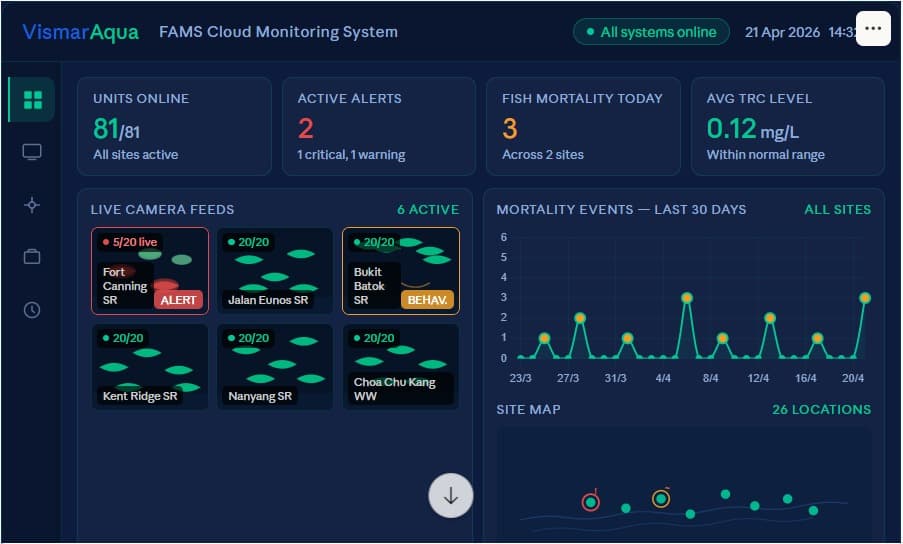
Modern controllers can determine the level of oxygen (temperature, pH, electrical conductivity, flow, level, etc.) and control the corresponding equipment. For example, if the oxygen level in the water drops (during feeding, the fish needs additional oxygen), the controller will immediately turn on the valve for supplying pure oxygen to the oxygen cone: water with a high saturation of this beneficial gas will enter the pool. When the upper limit of oxygen is reached, the controller will turn off its supply. This system allows you to significantly save expensive oxygen, which significantly increases the efficiency of the system. The same controller can control pumps, motors, and air compressors.
Your smart assistant immediately notifies you of any failure either via SMS or push notification to your mobile phone. It is important to respond very quickly to possible problems. This will significantly reduce or completely prevent possible losses.
We will constantly write about the technical side of this issue, because without technical means it is impossible to fully support the life activity of growing objects.
Food
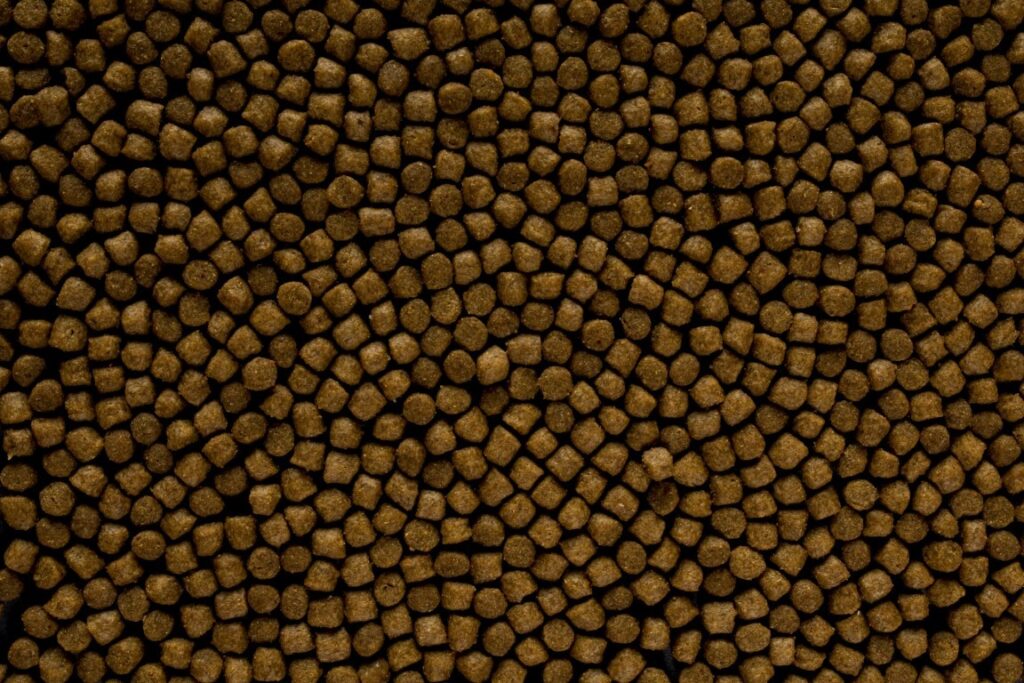
Since fish are grown in conditions that exclude the ingress of natural food and minerals, the feed must compensate for this deficiency and be balanced for a certain type of fish. Feed quality is one of the most important components of successful aquaculture. Thanks to a balanced diet, the fish realizes its growth potential faster, does not get sick, and is exposed to less stress.
It often happens that the fish are fed with just anything. Instead of fish food, they use food for cats, dogs, pigs and even poultry. All this affects the well-being of the fish, growth rate, mortality rate, taste, meat density, etc.
Often, slaughterhouse waste, small trash fish, shellfish meat, etc. are used as feed, especially for broodstock. All these components can be used, but again as a supplement and when feeding with high-quality, complete food. It is imperative to check these foods for any parasites that may enter your system. Perhaps it is better to heat-treat this feed first, and then add other components (flour, for example) to make a safe nutritious mass from it.
In our country there is no manufacturer of complete fish feed. At least not yet. This is due to the fact that there is not yet a great need for these feeds, because aquaculture is still at the lowest stage of development. Successful cultivation projects can be counted on the fingers of one hand. Aquaculture is not yet widespread, so almost all the main components (equipment, feed, materials, preparations) have to be imported.
But I will add that this is just for now.
I am sure that together we will be able to move this topic forward and we will soon have our own local factories for the production of feed, preparations, equipment.
Efficiency
It is clear that you want to raise fish cheaper and sell more expensive. This is a very good wish. But not everything is so simple! In order to grow cheaper, you need to use effective and workable solutions. And all these solutions, as a rule, are relatively expensive. But this is only at first glance. If you consider the effectiveness of expensive and reliable equipment, then you will be surprised that the cost of production when using such methods and solutions is significantly lower than the currently used solutions.
Someone wants to grow a certain amount of fish for their table – there is one technology. Someone wants to seriously become an aquafarmer – a slightly different approach is needed here.
Modern aquaculture dictates the use of effective solutions. Otherwise, in market conditions, the manufacturer cannot grow competitive products. A couple of days ago, one person who knows firsthand what aquaculture is and has built more than one system for growing fish on his personal farm, shared on the social network Facebook: “A mini farm will not be profitable if there is nothing something free: food, heat, electricity.” I took the liberty of correcting the text a little, because I’m sure that’s exactly what he wanted to say. Please note that this man invested hundreds of thousands of money into his farm and spent a colossal amount of time, nerves, etc. But I am more than sure that if he did everything from scratch now, he would be 100% able to implement a profitable farm for growing any type of fish.
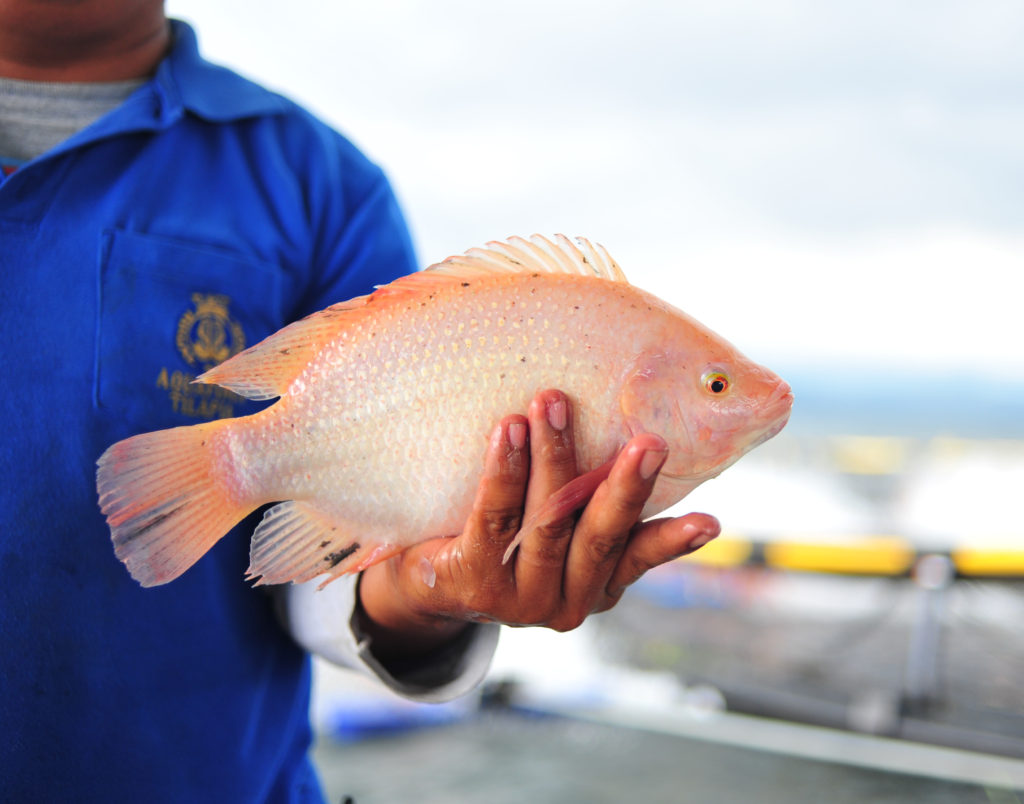
From the very beginning you need to choose the right technology and method of growing fish. It depends on the type of fish that you are going to raise. In the article at the link you will find several types of fish that, in my opinion, are promising for cultivation in our country. Someone wants to grow a certain amount of fish for their table – there is one technology. Someone wants to seriously become an aqua farmer – a slightly different approach is needed. At the very least, try to seek advice from people who know a little about the topic. This is the only way you can avoid and prevent the problems that may arise during the operation of the RAS.
So I was able to describe several of the main risks that your aquaculture business may be associated with. It is clear that in this article I did not touch upon such a concept as personnel. This is undoubtedly a very important factor, but it really needs a separate article. We have huge problems with personnel, because there are practically no free practitioners. Those that exist have been working somewhere for a long time and earning good money. Unfortunately, none of the domestic universities can boast of a modern educational base. And if you have only theory without practice, then nothing will work. Yes, and I have doubts about the fact that anyone teaches theory normally. And the quality of the material taught leaves much to be desired.